Aluminum oxidation: from nature to industrial control
The oxidation of aluminum is a natural phenomenon that plays a fundamental role in the protection and adaptation of its properties. When aluminum comes into contact with atmospheric oxygen, a thin layer of aluminum oxide quickly forms on its surface, known as 'patina'. This layer acts as a protective barrier, preventing further chemical reactions with oxygen and protecting the metal from corrosion.
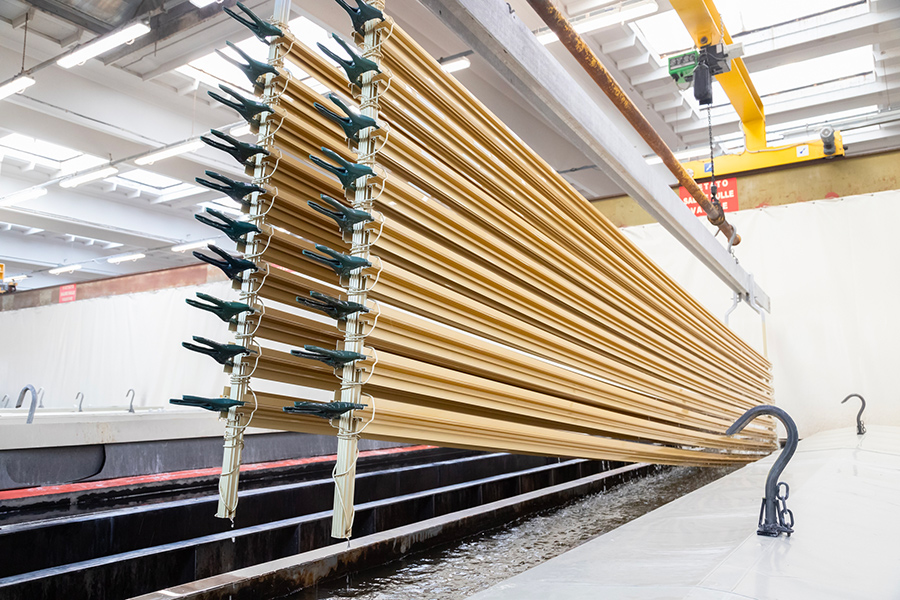
To accelerate and control this process, the industry uses the anodic oxidation technique. Here, aluminum is immersed in an electrolyte solution and subjected to a flow of electric current. During electrolysis, aluminum ions combine with those in the electrolyte to form a thicker layer. thick and uniform aluminum oxide on the surface of the metal, known as "anodizing". This layer can be further modified to obtain specific properties. desired physical and chemical properties.
In conclusion, the oxidation of aluminum, both natural and through anodic oxidation, is a crucial process to improve its properties and expand its applications in various industrial sectors. The ability The ability to customize the appearance and performance of aluminum through this process makes it an extremely versatile and indispensable material.